
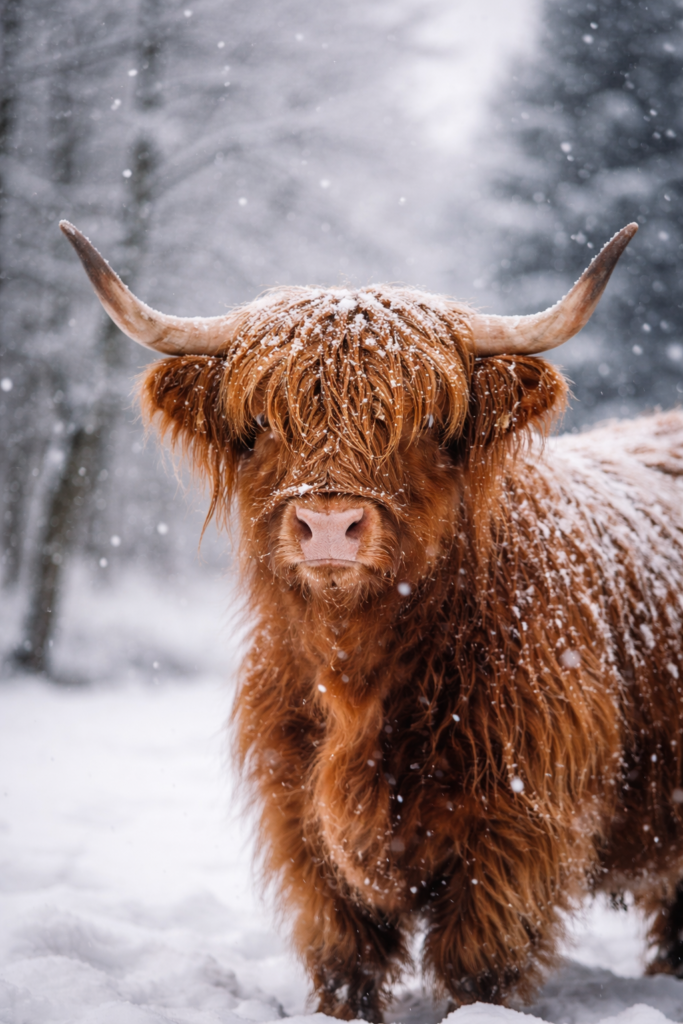
If you’ve ever seen a Highland cow standing calmly in the snow while everything else around it looks frozen solid, you might have wondered: do Highland cows actually like snow?
These shaggy Scottish cattle seem completely unfazed by icy weather, frosty fields, and winter storms. While most farm animals look miserable in the cold, Highland cows often appear relaxed, curious, and sometimes even playful when the snow arrives.
In this article, we’ll explore how Highland cows behave in winter, why snow doesn’t bother them, and some fun, surprising facts about how they handle cold weather so effortlessly.
Why Highland cows are so comfortable in winter
Highland cows are uniquely adapted to harsh environments, which is one reason they’ve remained such a resilient breed for centuries. If you’re curious about their background and characteristics beyond winter behaviour, you may enjoy our guide on what Highland cows are.
Highland cows originated in the harsh, mountainous regions of Scotland, where cold, wet, and windy weather is common for much of the year. Over centuries, they’ve developed natural traits that make winter conditions far less challenging for them than for many other cattle breeds.
This doesn’t mean Highland cows “enjoy” snow in the same way humans might enjoy a winter walk — but it does mean snow is well within their comfort zone.
Their iconic double coat is a winter superpower
One of the biggest reasons Highland cows cope so well in winter is their famous double coat.
The outer layer consists of long, coarse hair that sheds rain and snow, helping moisture slide off instead of soaking through. Beneath that is a dense, soft undercoat that traps warm air close to the body, acting like a built-in thermal blanket.
This combination allows Highland cows to stay warm even when temperatures drop well below freezing. In fact, they’re often more comfortable in cold weather than in hot summer conditions.
Do Highland cows behave differently when it snows?
Yes — and this is where things get fun.
Cold weather can subtly influence how Highland cows move, graze, and interact with their surroundings. Some of these winter behaviours connect closely to the way they express calmness and awareness, which we explore in more detail in our article on how Highland cows communicate.
Many Highland cow owners and farmers notice subtle behaviour changes when snow arrives. Rather than appearing stressed or uncomfortable, Highland cows often seem curious and relaxed.
They stay active instead of seeking shelter
Unlike some animals that immediately look for shelter during snowfall, Highland cows frequently continue grazing, walking, or standing calmly in open fields.
Because their coats insulate them so effectively, light to moderate snowfall doesn’t usually trigger the same stress response seen in less cold-tolerant breeds.
Snow doesn’t stop them grazing
Highland cows are excellent foragers. In winter, they’ll happily brush snow aside with their noses to reach grass beneath, especially during lighter snowfall.
This natural foraging behaviour is one reason they’ve historically thrived in rugged environments where food wasn’t always easy to access.
Fun winter facts about Highland cows
1. Snow can actually help keep them clean
It sounds strange, but snow can help knock mud and debris off a Highland cow’s long coat. As snow melts and refreezes lightly, it can loosen dried dirt, helping coats stay surprisingly tidy during winter.
2. They rarely shiver
Shivering is a sign that an animal is struggling to maintain body heat. Thanks to their insulation and slow heat loss, Highland cows are far less likely to shiver in cold weather compared to other cattle breeds.
3. Cold weather suits their temperament
Highland cows are known for their calm, steady personalities. Cold weather doesn’t tend to make them restless or agitated, which is another reason they appear so relaxed during snowfall.
4. Their horns don’t bother them in winter
Despite looking dramatic, Highland cow horns don’t cause problems in snowy conditions. They don’t lose heat through their horns in any meaningful way, and snow buildup usually falls off naturally.
Are Highland cows ever cold?
While Highland cows are extremely cold-tolerant, no animal is completely immune to harsh conditions.
Prolonged exposure to freezing rain, deep mud followed by frost, or severe wind chill can still be uncomfortable. This is why access to natural shelter, hedges, trees, or simple windbreaks is important — even for hardy breeds.
However, compared to many cattle, Highland cows are far less likely to suffer cold stress in winter environments.
Why Highland cows are often associated with snowy landscapes
There’s a reason Highland cows are so popular in winter photography, Christmas cards, and seasonal artwork.
The contrast between their long, shaggy coats and snowy backdrops creates a striking, cosy image that feels perfectly suited to winter. This visual appeal has helped cement Highland cows as one of the most iconic cold-weather animals in the world.
It’s not just about looks, though — their natural ability to thrive in winter makes those snowy scenes authentic, not staged.
Do Highland cows prefer snow to heat?
If given the choice, many Highland cows cope better with cold than with heat.
Hot summers can be more challenging for them, as their thick coats make it harder to regulate body temperature. In winter, they’re operating in conditions their bodies are designed for.
This is why you’ll often see Highland cows standing happily in snow while seeking shade, water, or breezes during hot weather.
What experts say about Highland cows and cold weather
Breed organisations and cattle specialists consistently highlight the Highland cow’s exceptional cold tolerance.
The Highland Cattle Society notes that the breed’s coat, hardiness, and efficient metabolism make it particularly well-suited to exposed and challenging environments — including cold, wet winters.
This long-established reputation is one of the reasons Highland cattle have remained popular for centuries in northern climates.
Final thoughts: do Highland cows like snow?
Highland cows may not “love” snow in a human sense, but they are exceptionally comfortable in it.
Their thick double coats, calm temperament, and natural cold tolerance mean winter weather barely slows them down. In many cases, snow suits them better than sunshine.
So the next time you see a Highland cow standing quietly in a snowy field, you can be confident it’s not suffering — it’s simply doing what Highland cows have always done best: thriving in the cold.