
How Much Land Does a Highland Cow Need?
If you’re considering keeping a Highland cow, one of the first — and most important — questions you’ll face is how much land you actually need. While photos online often show Highland cows roaming vast open fields, the reality is a little more nuanced. The amount of land required depends on pasture quality, grazing management, herd size, and your expectations as an owner.
This guide explains how much land a Highland cow realistically needs, why pasture quality matters more than raw acreage, and how to avoid the most common mistakes new owners make.
The Short Answer: Highland Cow Land Requirements
In most situations:
- 1–2 acres per Highland cow on good-quality, well-managed pasture
- 2–4 acres per cow on average or poorer grazing land
- More land if rotational grazing is not used or pasture recovery is limited
These figures assume you will provide supplemental hay during winter or periods of slow grass growth, which is standard practice for cattle in both the UK and US.
Why Land Matters So Much for Highland Cows
Highland cows are often described as hardy and low-maintenance, but that doesn’t mean they can thrive on minimal space. Like all cattle, they rely on consistent access to forage, room to move, and dry ground to stay healthy.
Keeping too many cows on too little land often leads to:
- Overgrazed, muddy fields
- Higher parasite pressure
- Increased feed and hay costs
- Stress-related behaviour issues
Land availability should be considered just as carefully as purchase price and ongoing expenses. If you haven’t already, it’s worth understanding how much a Highland cow really costs, as limited grazing can significantly increase long-term costs.
Pasture Quality vs Acreage for Highland Cows
Not all land is equal. Two acres of lush, well-managed pasture can support a Highland cow far better than four acres of thin, overgrazed ground.
High-quality pasture typically includes:
- A mix of grasses rather than a single species
- Good drainage
- Minimal bare or compacted areas
- Seasonal regrowth
Poor pasture forces cows to rely more heavily on hay and supplementary feed. Understanding what Highland cows eat will help you assess whether your land can realistically meet their nutritional needs.
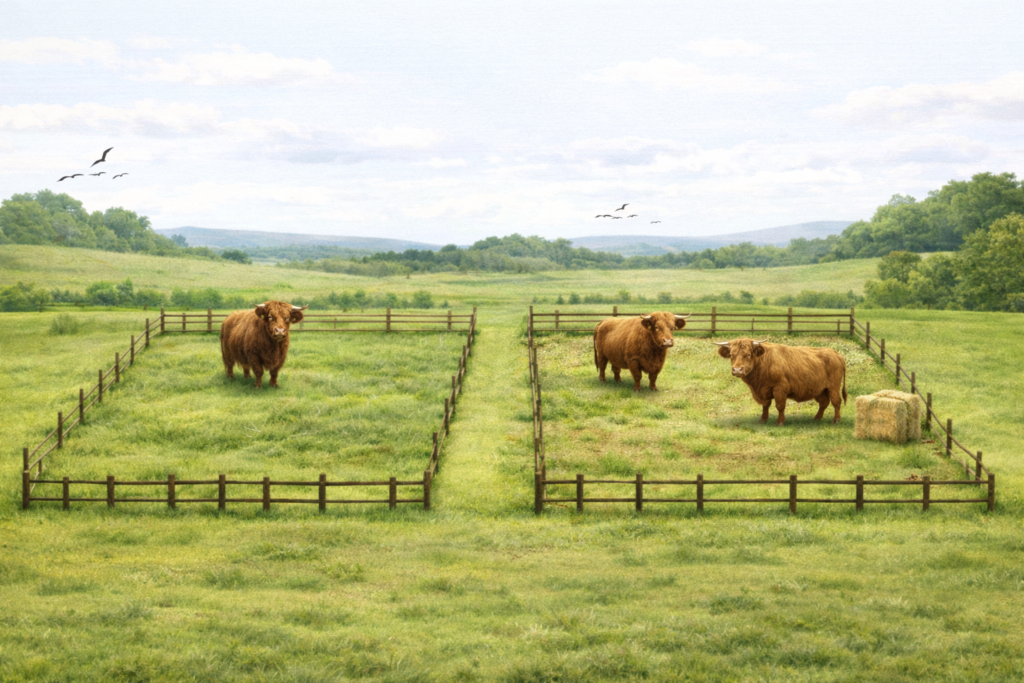
Rotational Grazing: Getting More from Your Land
Rotational grazing can dramatically reduce the amount of land required per cow. By dividing pasture into sections and rotating cattle regularly, grass has time to recover, soil health improves, and parasite loads are reduced.
Owners who use rotational systems often manage successfully with less land per cow than those who allow continuous grazing on a single field.
General cattle grazing guidelines published by agricultural bodies such as AHDB also highlight how stocking density and pasture recovery directly impact animal health and long-term land sustainability.
How Much Land Do Multiple Highland Cows Need?
Highland cows are social animals and should not be kept alone long-term. This means land planning needs to account for more than one animal.
- 2 cows usually require 3–6 acres
- 3 cows may need 5–8 acres
- Larger groups benefit greatly from rotational grazing
Trying to keep multiple cows on limited land is one of the most common mistakes new owners make.
UK vs US Land Expectations
Land requirements can vary significantly depending on location.
In the UK, pasture is often more productive, allowing smaller acreages to work when managed well. Winter feeding is normal, and many owners successfully keep Highland cows on relatively modest plots.
In the US, pasture quality varies widely by region. Drier states often require substantially more land per cow, and supplemental feeding may be needed for longer periods of the year.
Space for Shelter and Rest Areas
While Highland cows are well adapted to cold weather, land planning isn’t just about grass. Cows also need space for dry resting areas, shelter access, and natural windbreaks.
How Land Affects Behaviour and Temperament
Space plays a major role in behaviour. Cows kept on cramped or muddy land are more likely to become stressed or frustrated, which can affect how they interact with people and other animals.
Adequate space supports calm behaviour, something we explore further when discussing Highland cow temperament and friendliness.
Common Mistakes When Estimating Land Needs
- Assuming “hardy” means no management is required
- Ignoring pasture recovery time
- Underestimating winter feeding requirements
- Not planning for future herd expansion
Planning for comfortable space rather than the bare minimum leads to healthier animals and a far more enjoyable ownership experience.
Final Thoughts
While it’s possible to keep a Highland cow on limited land, aiming for the minimum often creates problems down the line. Planning for adequate space, good grazing, and proper management will save money, reduce stress, and support long-term animal health.
If you’re still in the planning stage, land availability should be considered alongside cost, feeding, shelter, and long-term commitment — not as an afterthought.