
Highland cows are among the most recognisable cattle breeds on the planet. With their long shaggy coats, impressive horns, and calm temperament, they have become symbols of Scotland and favourites among farmers, photographers, and animal lovers worldwide.
But despite their growing popularity, many people wonder: how many Highland cows are left in the world? Are they rare? Are they endangered? Or are their numbers actually increasing?
The answer is more encouraging than many people expect. While Highland cattle are not among the world’s most common breeds, they have successfully spread far beyond their Scottish origins and can now be found across multiple continents. Thanks to dedicated breeders and breed societies, the population remains healthy and continues to attract interest from new owners every year.
In this article, we’ll explore the global Highland cattle population, where these iconic animals live today, and what the future may hold for one of Scotland’s most beloved breeds.
How Many Highland Cows Exist Today?
There is no single worldwide database that tracks every Highland cow on the planet. However, breed societies, cattle registries, and agricultural organisations provide a good indication of population trends.
Today, Highland cattle can be found in dozens of countries, with significant breeding populations in Scotland, the rest of the United Kingdom, North America, Australia, New Zealand, and parts of mainland Europe.
While exact figures vary, estimates suggest there are tens of thousands of registered Highland cattle worldwide, with many additional animals existing outside formal registration systems.
This means Highland cattle are certainly not extinct or on the verge of disappearing. In fact, their popularity has helped maintain strong breeding programmes across multiple countries.
Where Did Highland Cows Originally Come From?
Highland cattle originated in the rugged Highlands and islands of Scotland, where they evolved to survive some of the harshest weather conditions in Europe.
Their famous long coat developed as protection against cold winds, heavy rain, and snowy winters. Their hardy nature allowed them to thrive in landscapes where many other breeds struggled.
For centuries, Highland cattle played an important role in rural Scottish communities, providing meat, income, and economic security for farming families.
If you’d like to learn more about their origins, you can read our guide to the history of Highland cows.
Are Highland Cows Rare?
The answer depends on how you define “rare.”
Compared to major commercial cattle breeds such as Angus, Hereford, or Holstein cattle, Highland cows are relatively uncommon. You are far less likely to see Highland cattle on large-scale commercial farms.
However, uncommon does not necessarily mean rare.
Highland cattle maintain healthy breeding populations across multiple countries, supported by active breed societies and enthusiastic owners.
The breed has also benefited from increasing public interest in traditional livestock, sustainable farming practices, and heritage breeds.
As a result, Highland cattle occupy an interesting position: they are distinctive and relatively uncommon, yet far from disappearing.
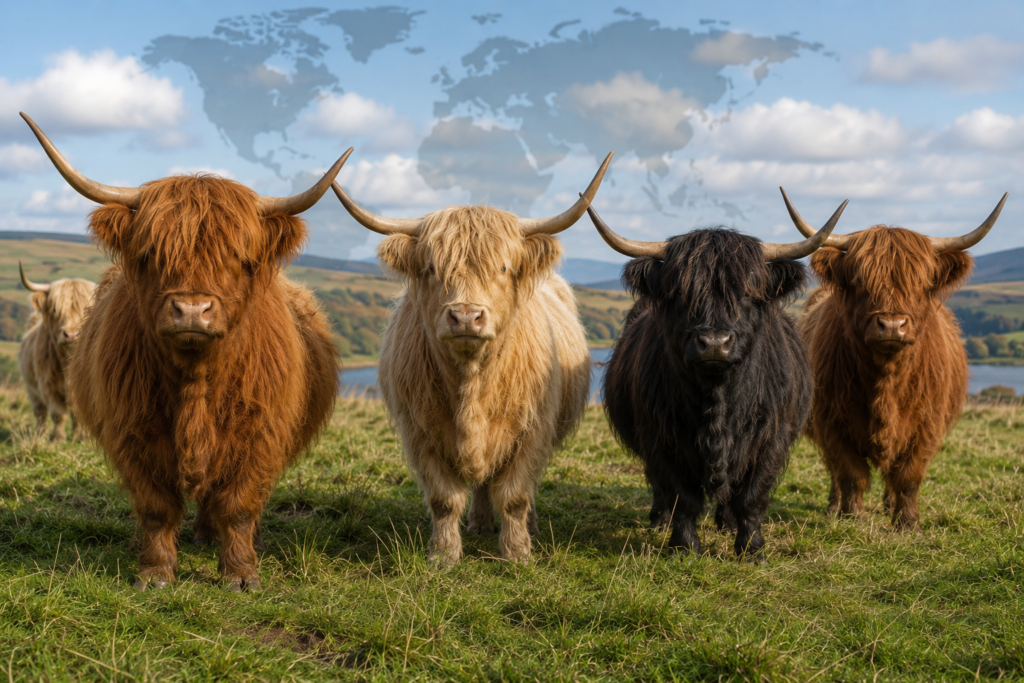
Which Countries Have the Most Highland Cows?
Although Scotland remains the breed’s spiritual home, Highland cattle have spread remarkably far across the globe.
Today, some of the largest populations can be found in:
- Scotland
- England
- Wales
- Northern Ireland
- United States
- Canada
- Australia
- New Zealand
- Germany
- Sweden
- Denmark
- The Netherlands
The breed’s adaptability is one of the main reasons for this international success. Highland cattle can thrive in cold climates, but they can also adapt surprisingly well to warmer regions when provided with suitable care and management.
This flexibility has helped breeders establish successful herds in a wide variety of environments.
Why Have Highland Cows Become Popular Worldwide?
Several factors have contributed to the breed’s global popularity.
Their Appearance
The most obvious reason is their unique appearance. Few livestock breeds are as instantly recognisable as a Highland cow.
Their long hair, sweeping horns, and distinctive faces make them popular subjects for photography, tourism, and social media.
Their Temperament
Highland cattle are often known for their calm and manageable nature.
While all cattle should be treated with respect, many Highland cow owners appreciate their generally steady temperament.
You can learn more in our article on whether Highland cows are friendly.
Their Hardiness
Highland cattle require less intensive housing than many other breeds because they are naturally adapted to outdoor living.
Their ability to cope with challenging weather conditions makes them attractive to many farmers and smallholders.
Their Heritage Value
Many people are drawn to Highland cattle because they represent an important part of Scottish agricultural history.
Owning or breeding Highland cattle allows farmers to help preserve a historic breed with centuries of cultural significance.
Are Highland Cows Endangered?
One of the most common misconceptions about Highland cattle is that they are endangered.
Fortunately, this is not currently the case.
Thanks to dedicated breed organisations and continued international interest, Highland cattle maintain stable populations across multiple regions.
Breed societies continue to register animals, monitor bloodlines, and encourage responsible breeding practices.
These efforts help preserve genetic diversity and ensure the long-term health of the breed.
For official breed information, the Highland Cattle Society remains one of the most respected organisations dedicated to preserving and promoting Highland cattle.
How Do Breed Societies Help Protect Highland Cattle?
Breed societies play a vital role in maintaining healthy populations.
Their responsibilities often include:
- Maintaining herd books and registrations
- Recording pedigrees
- Promoting responsible breeding
- Supporting genetic diversity
- Providing education for breeders
- Organising events and shows
Without these organisations, it would be much more difficult to preserve the characteristics that make Highland cattle unique.
They help ensure that future generations can continue to enjoy this remarkable breed.
Could Highland Cow Numbers Increase Further?
There are several reasons to believe Highland cattle will remain popular in the years ahead.
Interest in sustainable farming practices continues to grow, and many people are becoming increasingly interested in traditional livestock breeds.
In addition, Highland cattle have developed a strong public image that extends well beyond agriculture.
Tourism businesses, conservation projects, educational farms, and hobby farmers all contribute to ongoing demand.
The breed’s adaptability also gives it an advantage. Highland cattle can thrive in environments that may be less suitable for more intensive commercial breeds.
As awareness grows, it is entirely possible that global Highland cattle numbers will continue to increase.
Why Population Numbers Matter
Understanding population numbers is about more than simple curiosity.
Population data helps breeders, conservation groups, and agricultural organisations monitor the health of the breed over time.
Strong populations help maintain genetic diversity, reduce breeding risks, and provide resilience against future challenges.
Monitoring these trends also helps ensure that Highland cattle remain an important part of agricultural heritage for generations to come.
The Future of Highland Cattle
The future looks bright for Highland cattle.
Although they may never reach the enormous population levels of major commercial breeds, they continue to attract new admirers around the world.
The combination of historical significance, practical farming value, adaptability, and unmistakable appearance ensures that Highland cattle remain relevant in modern agriculture.
Whether seen grazing in the Scottish Highlands or on farms thousands of miles away, Highland cattle continue to represent one of the most successful heritage livestock breeds in the world.
Conclusion
So, how many Highland cows are left in the world?
While no exact global figure exists, Highland cattle populations are healthy and widely distributed across numerous countries. Tens of thousands of registered animals exist worldwide, supported by active breed societies and dedicated breeders.
Far from disappearing, Highland cattle continue to grow in popularity thanks to their hardiness, heritage, temperament, and iconic appearance.
As interest in traditional breeds and sustainable farming continues to increase, these remarkable Scottish cattle appear well positioned to thrive for many years to come.
Want to learn more about these amazing animals? Check out our guides on do highland cows have horns
and why are highland cows so friendly.