
Bringing a treat down to the pasture is one of the quickest ways to build trust and bond with a herd of cattle. Because of their incredibly docile, calm, and intelligent nature, Highland cattle quickly learn to recognize their owners and will often come trotting over the moment they see a treat bucket. However, because their complex ruminant digestive systems are highly sensitive, you cannot simply toss any kitchen scraps over the fence. If you are trying to tame a new calf or reward a favorite heifer, you need to know: what do highland cows eat as a treat?
The short answer is that Highland cows love crunchy root vegetables, sweet fruits, and specific grain-based treats like molasses-rolled oats. While their everyday diet should always consist of high-quality pasture grass, forage, and hay, adding healthy treats in strict moderation is an excellent way to handle enrichment and livestock training.
To keep your shaggy companions safe, healthy, and happy, let’s break down the best snacks to feed them—and the dangerous foods you must absolutely avoid.
Healthy Fruits and Vegetables Highland Cows Eat as a Treat
Highland cows have a massive sweet tooth, making fruits a high-value reward during handling or grooming sessions.
- Apples: This is a universal favorite in the cattle world. Apples provide excellent dietary fiber and carbohydrates. However, you should always chop or crush apples before feeding them to your cows. A whole apple can easily get stuck in a cow’s esophagus, causing a life-threatening condition known as “choke.”
- Peeled Bananas: The soft texture of bananas makes them an excellent, easy-to-digest treat for older cows or younger calves. They provide a quick boost of potassium and natural sugars.
- Watermelon Rinds: If you have leftover watermelon scraps during the summer, don’t throw them out! Highland cattle absolutely love the sweet, crunchy rind, which also helps keep them hydrated on warm days.
2. Crunchy Root Vegetables
Root vegetables are highly nutritious, packed with natural sugars, and can be stored easily in a barn or feed shed.
- Carrots: Carrots are arguably the ultimate training tool for cattle. They are inexpensive, packed with beta-carotene, and provide a satisfying crunch that cows love. Unlike apples, their elongated shape makes them much safer to feed, though cutting them into smaller sticks is still highly recommended for calves.
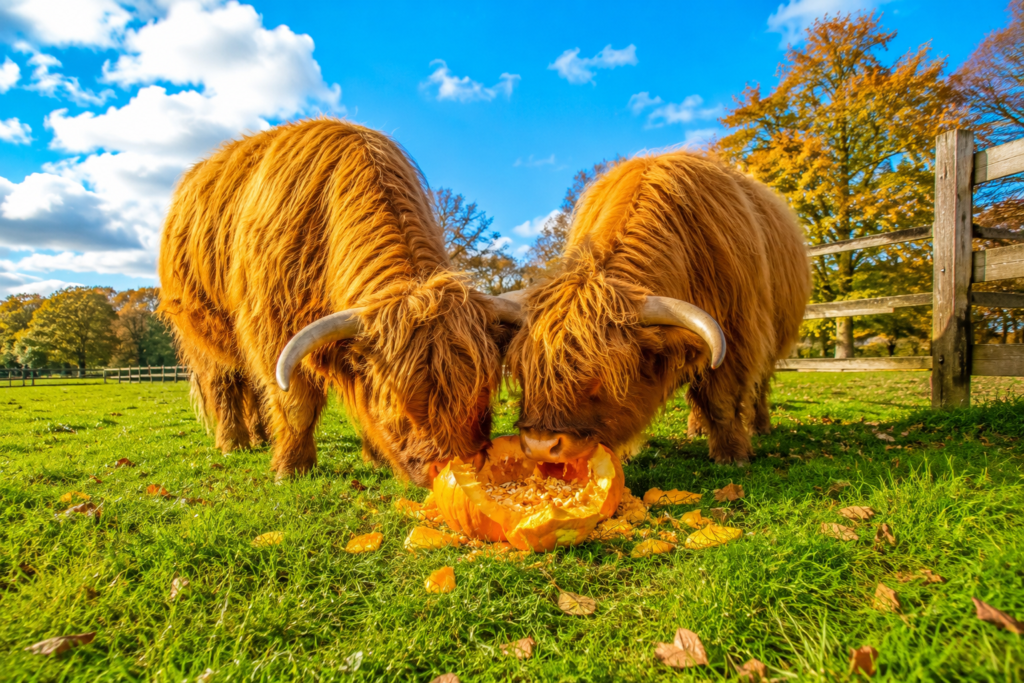
- Pumpkins: In the autumn, whole or smashed pumpkins serve as fantastic pasture enrichment. Cattle love to break them apart with their hooves and heads. As an added bonus, pumpkin seeds contain a natural compound called cucurbitacin, which agricultural research suggests can help support a healthy gut and naturally repel internal parasites in livestock.
3. Crunchy Grains and Commercial Snacks
If you prefer a treat that won’t spoil quickly in your pockets, grain-based snacks are a fantastic alternative.
- Sweet Feed and Molasses Oats: A handful of rolled oats mixed with a touch of livestock molasses is like candy to a Highland cow. It is highly aromatic, meaning they can smell it from across the field, making it the perfect tool if you need to lure your cattle into a corral or trailer.
- Alfalfa Cubes: These are highly compressed blocks of nutrient-rich hay. They are incredibly crunchy, healthy, and easy to keep in a pocket while you brush your cow’s thick coat.
4. Toxic Foods: What Highland Cows Cannot Eat as a Treat
While exploring what do highland cows eat as a treat, it is just as vital to understand what can make them incredibly sick. Never feed your cattle any of the following items:
- Avocados: The skin, pit, and leaves of avocados contain a toxin called persin, which is highly poisonous to cattle and can cause fatal heart damage.
- Potatoes and Brassicas (In Excess): Raw green potatoes contain solanines which are toxic to ruminants. Large quantities of raw cabbage, broccoli, or turnips can also disrupt the delicate balance of their rumen, causing severe bloat.
- Processed Human Food: Avoid feeding bread, cookies, chocolate, or anything containing animal by-products. Stick exclusively to clean, natural whole foods.
Safe Feeding Practices for Smallholders
To prevent your treats from causing accidental injury, always practice safe hand-feeding. Keep your palm completely flat when offering a carrot or chopped apple, as cows do not have top front teeth and use their strong tongues to sweep food into their mouths.
Additionally, remember that treats should make up less than 10% of their total daily food intake. Keep the portions small, keep the ingredients natural, and you will have a fiercely loyal herd that follows you anywhere!
Want to learn more about managing a healthy herd? Visit our Highland Cow Facts library for more smallholder tips!