
When setting up a smallholding or establishing a new pasture for heritage livestock, checking for environmental hazards is a vital safety step. Because of their ancient genetics and survival instincts, Highland cattle are incredibly resourceful foragers. They will gladly clear thick brush, coarse weeds, and rough scrubland that other commercial breeds refuse to touch. However, this adventurous appetite can sometimes lead them toward dangerous vegetation.
Identifying common plants toxic to Highland cows is crucial for every hobby farmer to prevent severe digestive distress, neurological issues, or sudden livestock loss.
While these shaggy cattle have a natural intuition for avoiding harmful vegetation when good grass is plentiful, overgrazed pastures or drought conditions can push hungry animals to browse on toxic weeds. Below is a comprehensive guide to the most dangerous plants you need to eradicate from your pastures.
Common Toxic Plants to Watch Out For
Many everyday countryside plants contain chemical compounds that are highly poisonous to ruminants. Understanding what these look like during different seasons will help keep your fold safe.
1. Bracken Fern (Pteridium aquilinum)
Bracken is incredibly common across rugged hillsides and woodlands. While a mature Highland cow might browse on it occasionally without issues, consuming large quantities over time triggers bracken poisoning due to an enzyme called thiaminase. This destroys vitamin B1 in the animal’s body and can lead to internal hemorrhaging or bone marrow damage.
2. Common Ragwort (Jacobaea vulgaris)
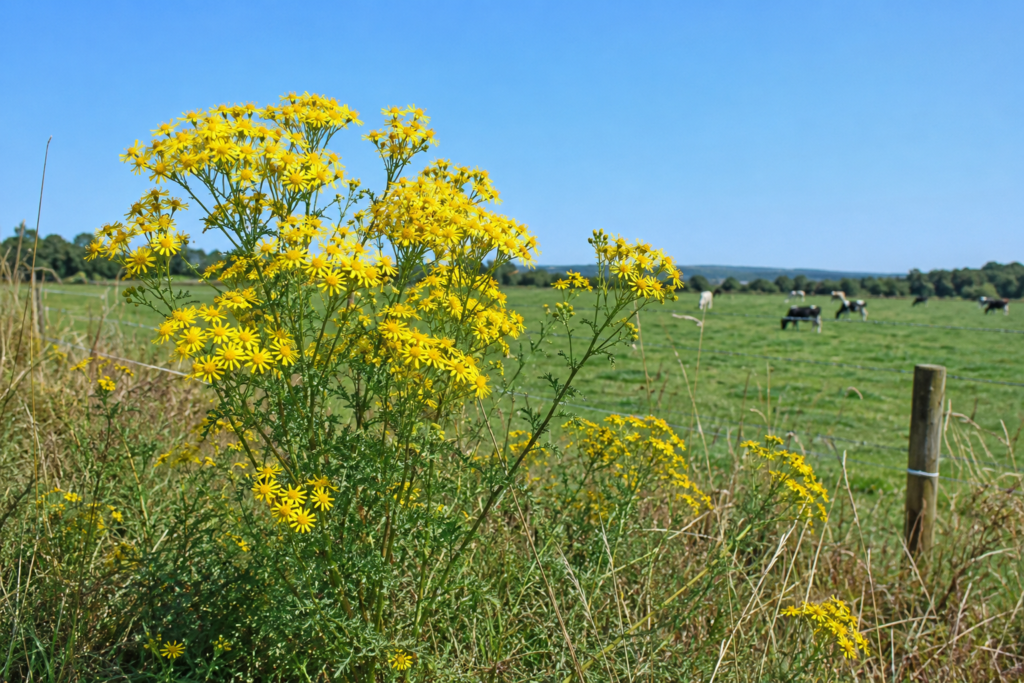
Ragwort is perhaps the most insidious threat on a hobby farm. When fresh, the plant has a bitter taste that cattle generally avoid. However, when ragwort is cut, dried, and accidentally baled into winter hay, it loses its bitter flavor but retains its lethal pyrrolizidione alkaloids. Regular consumption causes cumulative, irreversible liver damage over several months.
3. Yew Trees (Taxus baccata)
Often found near old homesteads, churchyards, and historic property boundaries, yew is exceptionally toxic. Just a small handful of yew needles contains taxine alkaloids, which cause almost instantaneous cardiac arrest in cattle. Ensure that your boundary fencing prevents your cows from reaching over into ornamental garden hedges where yew may be planted.
Recognizing Signs of Plant Poisoning in Cattle
Because cattle are prey animals, they naturally hide signs of illness or vulnerability until an infection or toxin is well advanced. As a herd manager, you should look out for early behavioural shifts:
- Digestive Problems: Excessive drooling, bloating, severe diarrhea, or blood in the stool.
- Neurological Changes: Unsteady gait (ataxia), muscle tremors, blindness, or unusual lethargy.
- Physical Weakness: Sudden weight loss, a dull coat, or an inability to stand up with the rest of the herd.
If you suspect an animal has consumed something harmful, immediately remove the rest of the fold from that specific paddock and contact an agricultural veterinarian.
Best Practices for Toxic Pasture Weed Control
Managing your acreage effectively is the single best defense against accidental poisoning. Keeping your land healthy reduces the risk of toxic plants taking root.
Implementing Rotational Grazing Techniques
Overgrazing forces cattle to eat close to the ground, increasing the likelihood that they will consume toxic roots or less desirable weeds. Implementing a clean pasture rotation schedule ensures your grass remains dense and vibrant, naturally choking out invasive weeds before they sprout.
Implementing a clean pasture rotation schedule ensures your grass remains dense and vibrant, naturally choking out invasive weeds. For a complete breakdown of managing your acreage, refer to our guide on how much space Highland cows need.
Manual Eradication and Land Maintenance
Walk your fence lines at the start of every spring and summer to inspect the perimeter. Pull ragwort out by the roots using heavy-duty gloves, and ensure that any cut weeds are completely removed and burned away from the pasture, as dried plant debris remains toxic.
For official regulatory guidelines on weed control and statutory land management codes, you can consult the UK Department for Environment, Food & Rural Affairs (DEFRA), which outlines landowners’ legal responsibilities for controlling invasive weeds.