
For hobby farmers and heritage livestock enthusiasts, few milestones are as exciting as welcoming a new calf to the smallholding. However, managing a successful breeding program requires a clear understanding of the Highland cow gestation period timeline. Knowing exactly how long these shaggy cattle carry their calves ensures you can provide the correct nutritional support and prepare a safe calving environment well ahead of time.
While cattle reproduction shares general similarities across all breeds, heritage animals like Highland cattle often display subtle differences in behavior, maternal instincts, and physical maturity.
Below, we break down the duration of a typical pregnancy, key physiological signs to watch for, and how to manage your herd effectively throughout the process.
Understanding the Highland Cow Gestation Period
On average, the Highland cow gestation period lasts between 273 to 293 days. For easy calendar mapping, most breeders use 283 days (roughly 9 and a half months) as their baseline target date.
This duration can fluctuate slightly depending on several natural factors:
- Sex of the Calf: Bull calves are routinely carried a day or two longer than heifer calves.
- Age of the Dam: First-time mothers (heifers) may calve slightly earlier or later than experienced cows.
- Litter Size: While extremely rare, twin pregnancies typically result in a shorter developmental timeline.
Because Highland cattle are a hardy, natural breed, their calving process is famously unassisted compared to modern beef breeds. Their pelvic design makes delivery smooth, which you can read about in our detailed guide on how Highland cows raise their calves.
Key Signs of a Highland Cow Pregnancy
Monitoring your fold during the third trimester of the Highland cow gestation period is essential for spotting the physical changes that signal an approaching delivery.
Third Trimester Gestation Body Changes
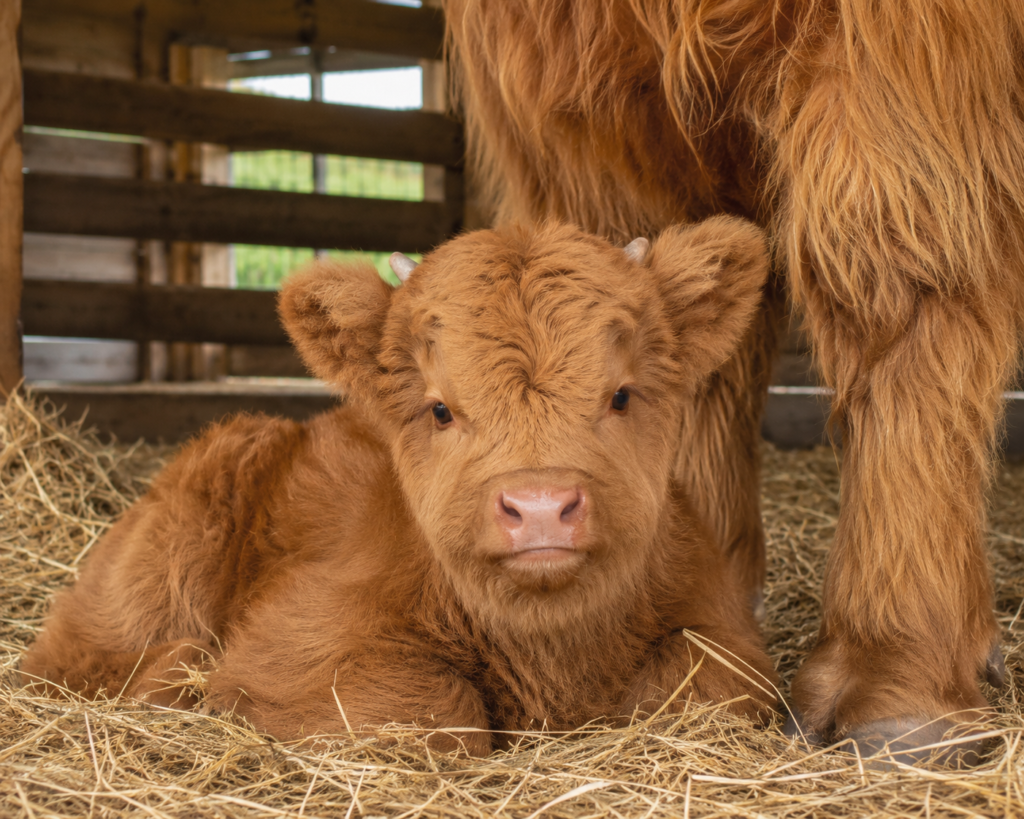
As the months progress, the cow’s abdomen will noticeably expand on the right side. In the final four to six weeks, her udder will begin to “bag up,” filling out with vital colostrum. Due to their thick, shaggy double coats, these physical changes can sometimes be harder to spot on a Highland than on short-haired dairy cattle, requiring closer visual inspection during feeding times.
Behavioral Signs of Approaching Calving
Within 24 to 48 hours of giving birth, an experienced dam will naturally isolate herself from the rest of the herd. She may seek out a quiet, sheltered corner of the pasture or stand near trees. Additional indicators include clear mucus discharge, noticeable relaxation of the pelvic ligaments around the tailhead, and frequent transition between standing up and lying down.
Managing the Highland Cow Gestation Period
Maintaining optimal herd management during this multi-month window sets both the mother and her future calf up for long-term health success.
1. Nutritional Adjustments During Gestation
During the final third of the Highland cow gestation period, the developing calf experiences its most rapid growth phase. While Highlands thrive beautifully on forage, pregnant cows require access to high-quality hay, clean pasture, and balanced mineral blocks to support embryonic bone growth without causing the mother to lose body condition.
2. Preparing Safe Calving Spaces
Highland cattle possess powerful, deeply ingrained maternal instincts. They prefer giving birth outdoors on a clean, dry patch of grass rather than inside a cramped barn. Ensure your winter or spring pastures have adequate windbreaks, dry bedding areas, and sturdy fencing to protect the newborn calf from predators or harsh weather.
For official livestock care frameworks, disease prevention guidelines, and regional statutory herd management records, you can review the current resources provided by the UK Gov Livestock Code of Practice for Cattle.