
Do Highland Cows Need Shelter?
Highland cows are famous for being hardy. Their long coats, thick skin, and calm nature often lead people to assume they can live outdoors with no protection at all. While there is some truth to that reputation, the real answer to whether Highland cows need shelter is more nuanced.
The short version is this: Highland cows can tolerate harsh weather better than many cattle breeds, but that does not mean shelter is unnecessary. In certain conditions, providing shelter is not just beneficial — it’s essential for welfare, health, and long-term management.
This guide explains when Highland cows need shelter, what types of shelter actually work, and the common mistakes owners make when relying too heavily on the breed’s hardiness.
The Short Answer
Yes, Highland cows benefit from shelter — particularly from wind, persistent rain, and muddy conditions. While they cope well with cold temperatures, prolonged exposure to wet weather and strong winds can still cause stress, weight loss, and health issues.
Shelter does not always mean a barn or stable. In many cases, natural or simple field shelters are more than sufficient.
Why Highland Cows Are Considered Hardy
Highland cows evolved in harsh Scottish environments, which explains many of their physical traits:
- Long, double-layered coats that insulate against cold
- Thick skin that offers protection from wind
- Efficient grazing habits that suit rough pasture
Because of this, Highland cows cope with cold far better than heat and are often comfortable outdoors in winter conditions that would challenge other breeds.
However, hardiness does not mean immunity to discomfort or health risks.
When Shelter Really Matters
The biggest threat to Highland cows is not cold — it’s wind combined with rain. Wet conditions strip heat from the body far faster than dry cold.
Shelter becomes particularly important when:
- Heavy rain is persistent
- Strong winds are common
- Ground becomes muddy or waterlogged
- Cows are forced to stand in exposed areas
Over time, these conditions can lead to weight loss, higher feed requirements, and stress.
Natural Shelter vs Man-Made Shelter
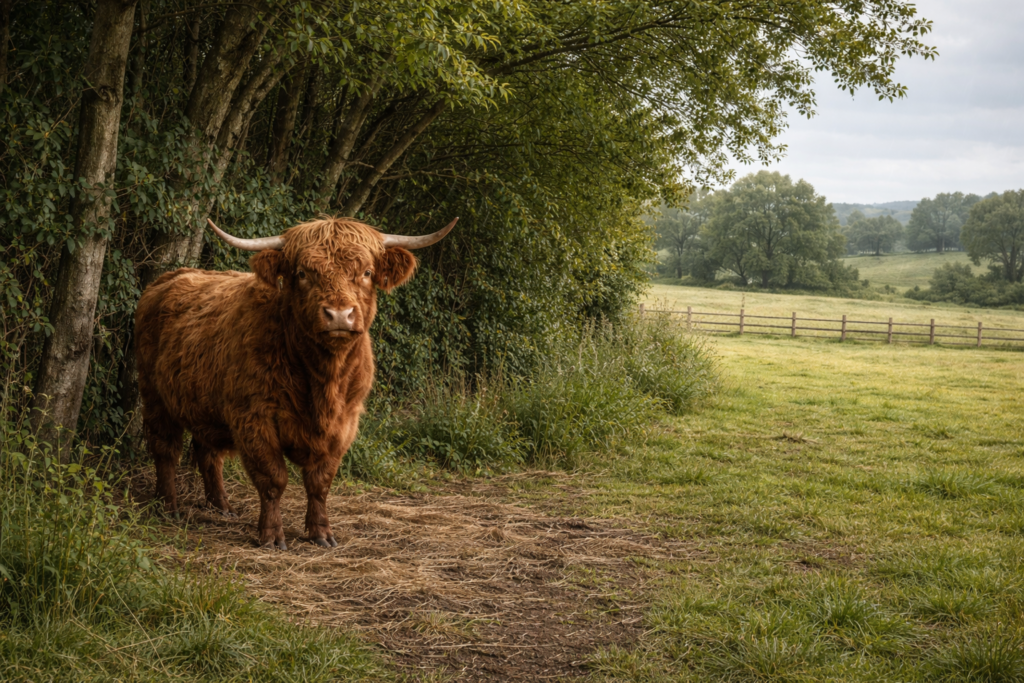
Not all shelter needs to be man-made. In fact, many Highland cows prefer natural protection if it’s available.
Natural shelter includes:
- Tree lines or woodland edges
- Hedgerows
- Banks, hills, or natural dips in the land
These features reduce wind exposure and provide dry resting areas when used correctly.
Man-made shelter may be needed when natural options are limited. Common solutions include field shelters, windbreak fencing, or simple three-sided structures.
Do Highland Cows Need Shelter in Winter?
In cold, dry winter weather, Highland cows often do very well without enclosed housing. Their coats insulate effectively, and many choose to remain outdoors even when shelter is available.
Problems arise when winter brings prolonged wet weather. Standing in mud or saturated ground for long periods increases the risk of:
- Foot problems
- Skin irritation
- Increased parasite pressure
This is why land management and shelter planning go hand in hand. If pasture drains poorly, shelter becomes more important. This ties closely into how much land a Highland cow needs and how that land is managed.
What About Calves and Vulnerable Animals?
Calves, older cows, and animals in poorer condition are less resilient than healthy adults.
For these groups, access to shelter is strongly recommended, particularly during:
- Heavy rain
- Cold winds
- Periods of illness or recovery
Providing shelter in these situations supports welfare and can prevent avoidable health problems.
How Shelter Affects Behaviour and Stress
Cows that cannot escape harsh conditions often become stressed. Stress affects:
- Feed efficiency
- Immune response
- Behaviour around people and other animals
Space and protection work together. Cows kept on cramped or exposed land are more likely to become unsettled. This links closely to temperament, which we explore further in our guide on why Highland cows are often considered friendly.
Common Shelter Mistakes
New owners often make the same assumptions:
- “They’re hardy, so they don’t need anything”
- Providing shelter but placing it in a muddy area
- Offering shelter that blocks airflow completely
- Ignoring wind direction when positioning structures
Shelter should reduce exposure without creating damp, unhygienic conditions.
Legal and Welfare Expectations
In many regions, animal welfare guidance expects owners to protect livestock from unnecessary suffering. While laws vary, best practice is clear.
UK guidance from organisations such as the RSPCA highlights the importance of protection from severe weather, particularly wind and rain.
Providing appropriate shelter is part of responsible ownership, not an optional extra.
So, Do Highland Cows Need Shelter?
Highland cows do not require intensive housing, but they do benefit from protection in the right conditions. Cold alone is rarely the issue — exposure to wind, rain, and poor ground conditions is.
Good shelter planning, combined with adequate land and sensible management, keeps Highland cows healthier, calmer, and easier to care for long term.
If you’re planning ownership, shelter should be considered alongside land size, feeding, and overall costs — not as an afterthought.