
While the iconic, long double coat of a Highland cow is an evolutionary masterpiece for surviving brutal winter blizzards, it presents unique seasonal challenges. Implementing an effective Highland cow fly control strategy is essential when temperature levels climb and cattle flies, midges, and mosquitoes quickly become a hobby farmer’s worst nightmare. Without proper protection, your fluffy herd faces painful skin irritation, weight loss, and serious infections like infectious bovine keratoconjunctivitis (pinkeye).
Managing pests on heritage breeds requires a slightly different approach than standard commercial livestock. Below, we break down the most practical, safe, and effective methods to keep summer pests off your fluffy herd.
Why Pests Target Highland Cattle Differently
Standard cattle breeds can easily twitch their skin or use their tails to clear biting insects. While Highlands have functional tails, their thick coats can act as a trap for pests.
- The Dossan Trap: The long hair hanging over a Highland’s face creates a warm, moist environment around the eyes. Face flies feed on these ocular secretions, easily spreading bacteria from animal to animal.
- Heat & Moisture Absorption: On hot days, moisture and sweat can get trapped close to the hide beneath the outer guard hairs. This damp environment acts as an ideal nesting ground for horn flies and stable flies.
Without targeted pest control, constant head shaking and rubbing against fence posts can cause broken horn tips, raw skin patches, and a drop in overall herd condition.
Best Practices for Highland Cow Fly Control
Achieving total relief from insects requires an integrated pest management (IPM) framework. Relying on a single spray is rarely enough; instead, combine the following methods for maximum protection.
1. Fly Masking and Manual Pests Defenses
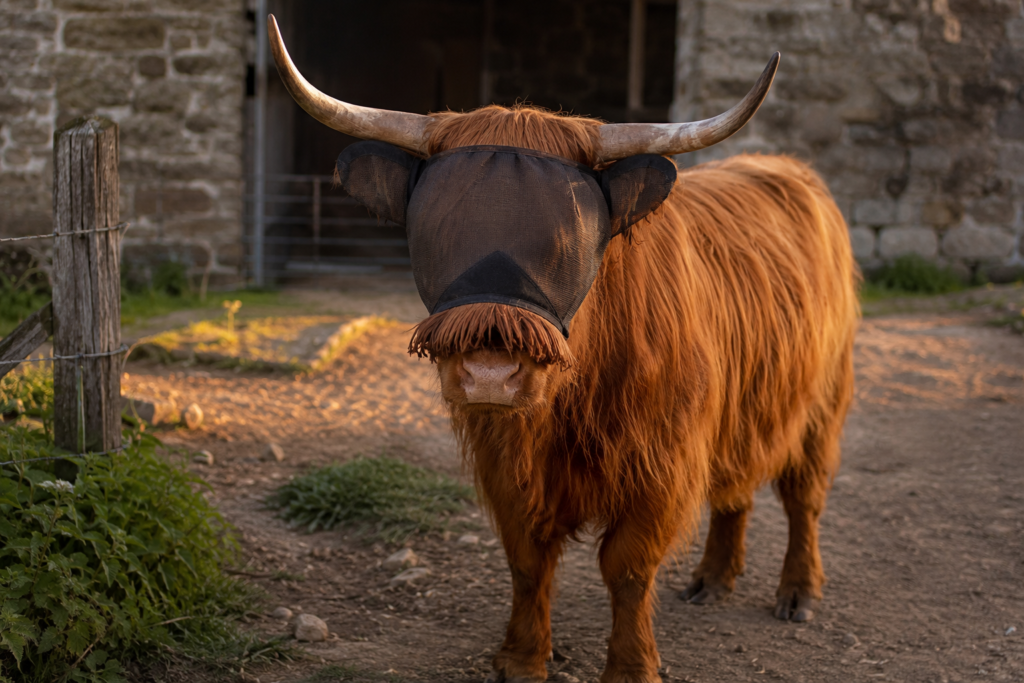
For smaller hobby folds or particularly sensitive companion cows, livestock fly masks designed for cattle are highly effective. They prevent face flies from landing near the tear ducts, completely eliminating the primary transmission route for summer pinkeye.
2. Strategic Pour-On Fly Treatments
Chemical pour-ons containing permethrin or beta-cyfluthrin are popular options among homesteaders. However, due to the heavy, oil-repellent nature of a Highland’s double coat, you must part the shaggy hair along the spine to ensure the chemical liquid makes direct contact with the skin. Applying a pour-on directly to the tip of thick winter fur will render the treatment ineffective. Always follow correct dosage guidelines based on accurate livestock weight scales.
Always follow correct dosage guidelines based on accurate livestock weight scales, which you can estimate using our guide on how much Highland cows weigh.
3. Pasture Management and Biological Fly Control
Flies breed in wet manure and rotting organic waste. Rotating your pastures weekly keeps your herd away from freshly dropped patties where larvae mature. Additionally, installing standard automated rub bars soaked in livestock mineral oil and fly dust allows your cows to self-treat their coats while walking out to graze.
Natural Highland Cow Fly Control Alternatives
If you prefer to run a chemical-free homestead, several organic alternatives offer solid protection:
- Garlic Mineral Blocks: Feeding garlic salt or garlic-infused mineral tubs changes the scent profile of the cow’s sweat, making them significantly less attractive to horn flies.
- Essential Oil Sprays: Water-diluted mixes of citronella, peppermint, and lemongrass oil provide excellent short-term relief, though they must be reapplied more frequently than commercial alternatives.
- Fly Parasites: Introducing beneficial predatory wasps (Muscidifurax raptor) to your manure piles early in the spring naturally destroys fly pupae before they ever hatch into biting adults.
To learn more about the broader livestock safety rules, veterinary health regulations, and seasonal parasite guidelines across the country, you can consult the official government standards hosted by the UK Department for Environment, Food & Rural Affairs (DEFRA).