
Highland cows are instantly recognisable for their shaggy, long hair — but one question comes up time and time again: can they actually see through all that fringe? It’s a fair question, especially when their eyes are often completely covered by that iconic mop of hair. In this post, we’ll uncover the truth about Highland cow vision, explore how their hair impacts what they see, and whether it affects their health or behaviour.
Do Highland Cows Have Good Vision?
Yes, Highland cows have decent vision overall — comparable to most other breeds of cattle. Like other herd animals, they rely on a wide field of view to detect movement and predators. Their eyes are positioned on the sides of their head, giving them a broad, almost panoramic range of sight. However, this also means they have a small blind spot directly in front of their nose and behind their head.
In normal conditions, Highland cows can navigate pasture, spot threats, and interact with their environment without difficulty.
So… Can Highland Cows See Through Their Hair?
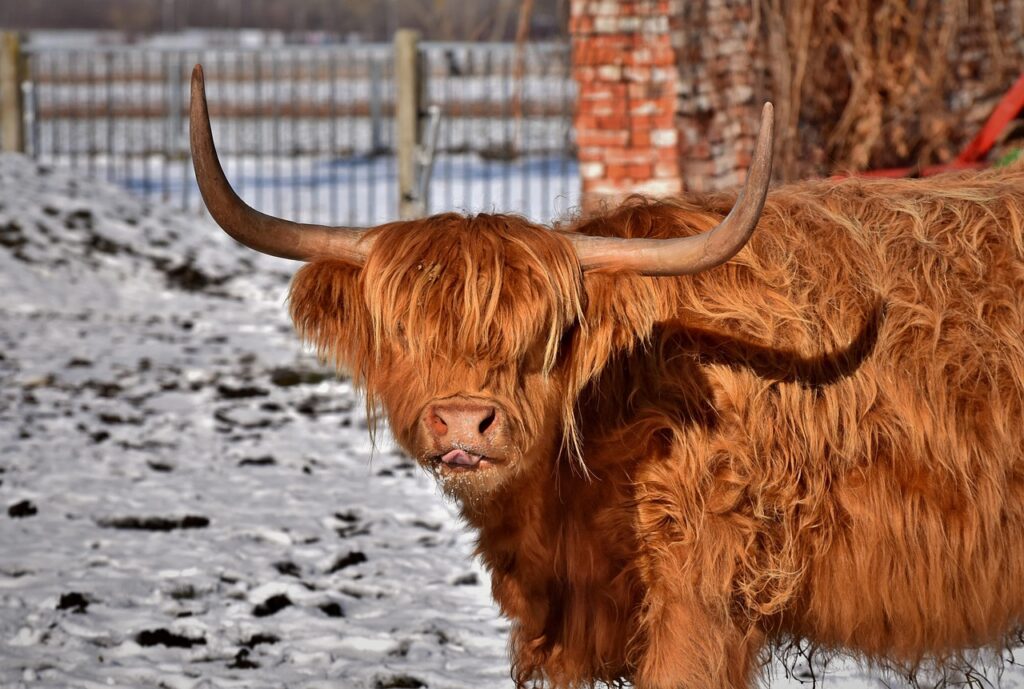
Surprisingly, the answer is yes — at least to some extent. That long fringe covering their eyes is known as a “dossan”, and it serves several protective purposes. Although it may look like it completely blocks their view, Highland cows are quite capable of seeing around or even through the strands.
Think of it like a person looking through their own hair or wearing a loose sun hat: vision may be slightly limited, but not entirely obstructed. Highland cows adapt to this by tilting their heads or adjusting their positioning if they need a clearer view.
What Is the Purpose of Their Fringe?
While it may look like a fashion statement, the long fringe actually plays a valuable role in protecting Highland cows:
- Blocks wind and rain: The hair shields their eyes from harsh weather, especially in Scotland’s cold and wet conditions.
- Acts as a fly barrier: It keeps biting insects like midges away from the sensitive eye area.
- Reduces sun glare: It softens bright light and UV exposure.
The fringe is part of what allows Highland cattle to thrive in extreme climates with minimal need for shelter or intervention — a fact supported by the Highland Cattle Society, which documents their long-standing adaptation to harsh Scottish environments.
Does the Hair Ever Cause Problems?
Generally speaking, no. Highland cows are remarkably self-sufficient, and their coat rarely interferes with their wellbeing. That said, in domesticated or hobby farm settings, where cattle may be more closely monitored or even groomed, there are a few things to watch for:
- Overgrown fringe may occasionally limit vision if the hair is unusually dense or matted.
- Excess moisture or trapped debris could lead to eye irritation or infection if not noticed.
- Older cows may benefit from light trimming if their mobility or awareness is impacted.
Farmers who show Highland cattle sometimes trim or tidy the fringe for presentation, but it’s rarely done out of necessity.
Do They Use Other Senses to Compensate?
Absolutely. Highland cows have excellent hearing and a strong sense of smell. If their visual field is slightly limited by hair, they more than make up for it with:
- Keen hearing: They can detect movement or voices from a distance.
- Sensitive noses: Used for identifying food, calves, other herd members, and humans.
- Body awareness: Like many prey animals, they have a strong spatial instinct and can navigate tight terrain or herds confidently.
Even with their fringe, Highland cows remain alert and highly responsive to their surroundings.
Do All Highland Cows Have the Same Amount of Hair?
No — hair length and density can vary quite a bit between individuals and bloodlines. Factors include:
- Age: Younger calves often have shorter fringes until they grow into their adult coat.
- Climate: Highland cows in milder regions may develop less dense coats than those in cold, windy areas.
- Lineage: Some cows have naturally fluffier or longer fringes due to genetics.
Still, the fringe is a signature feature and generally well-tolerated by the animal regardless of its length.
How Do Highland Cows Interact with Each Other If They Can’t See Well?
This is where their strong instincts and herd dynamics come into play. Cattle use body language, vocalisations, and scent far more than eye contact. Highland cows are no exception. They may appear aloof or mysterious behind their fringe, but they’re very social animals that thrive in groups and communicate constantly.
Fun Fact: The Fringe Has Fans!
The Highland cow fringe — or dossan — is so beloved that it’s often a feature in artwork, plush toys, and even memes. Many fans of the breed love the way it makes the cows look wise, gentle, or even humorous. It’s one of the breed’s most recognisable and charming features.
Conclusion
So, can Highland cows see through their hair? Yes — they’ve evolved to manage just fine with their thick fringe. While their vision may be partially limited, it’s not a handicap. In fact, their long hair serves important protective functions, and their other senses help them stay safe and social.
That fringe isn’t just iconic — it’s functional. So next time you see a Highland cow peeking out from behind its mop of hair, you’ll know it sees you too… just in its own laid-back way.